Stop waiting for the perfect robot
While Europe debates whether humanoid robots are ready, China is busy finding out. And the companies laughing at the failures might be missing the biggest opportunity of all.

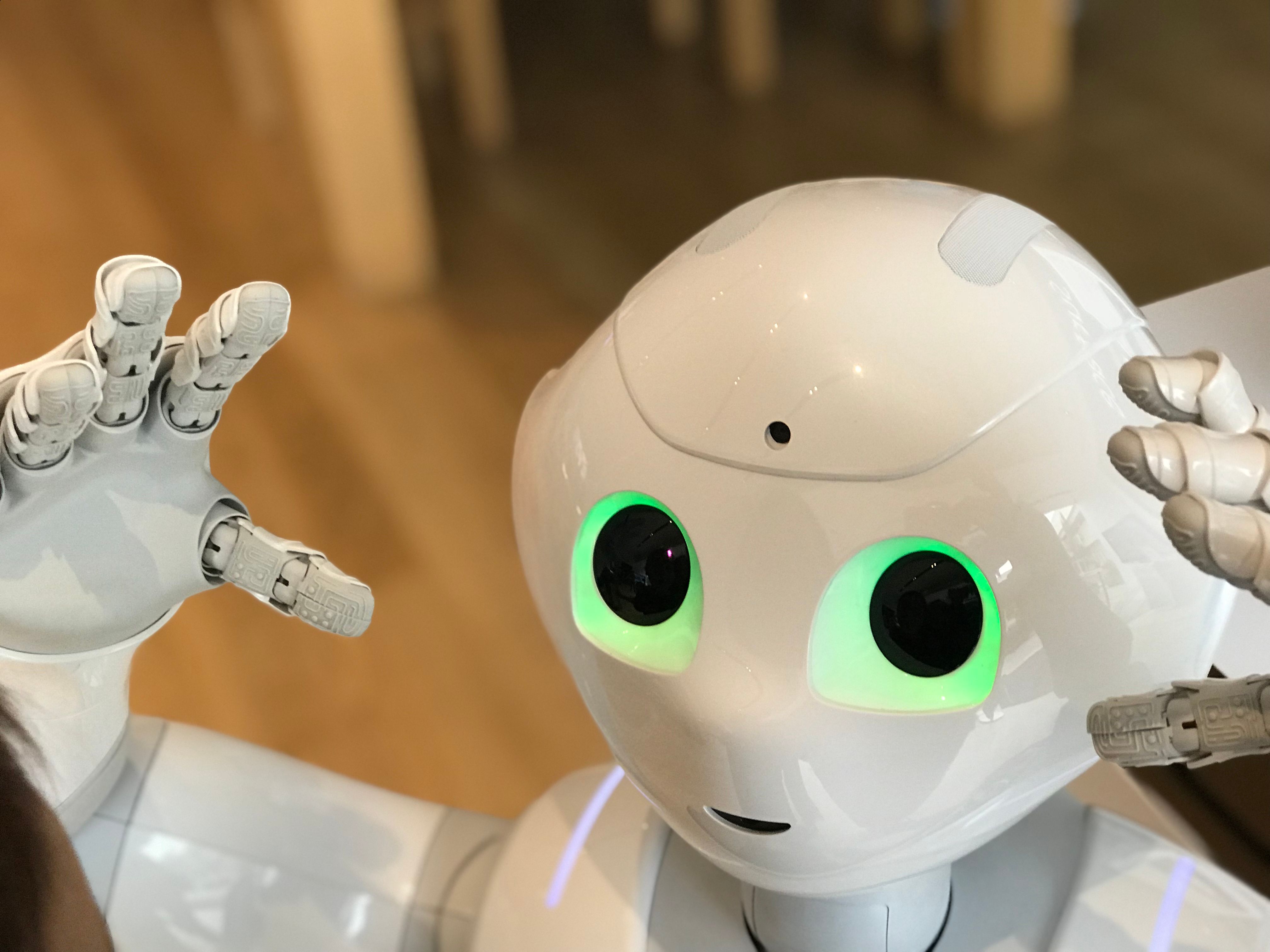
At the World Robot Games in China, robots fell over. Some crashed spectacularly. A few even threw sparks. Videos of humanoids face-planting on running tracks travelled around the world, usually accompanied by a healthy dose of Western amusement.
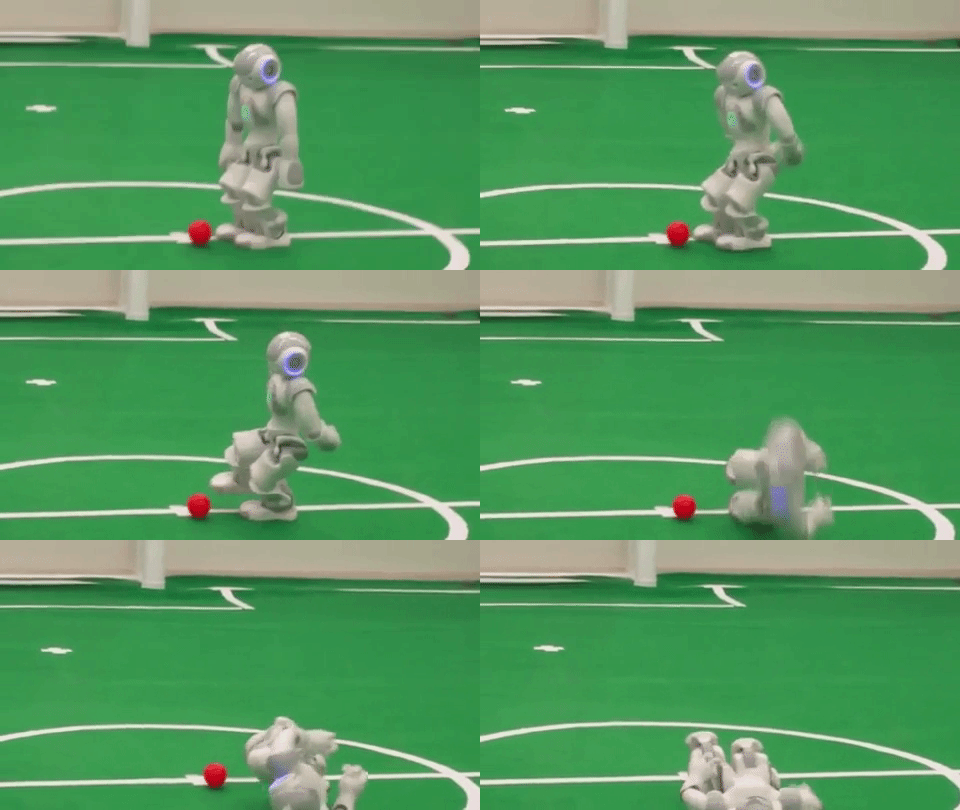
We laughed at the robots falling over. China was already figuring out how to get them back on their feet.
Pascal Coppens saw the same footage and came to a different conclusion. In the latest episode of the Second Horizon podcast, he and co-host Marcel Münch explore China's push into humanoid robotics and what European businesses can learn from it.
Because this story isn't really about robots.
It's about what happens when one part of the world waits for technology to become reliable, while another learns how to make it reliable by putting it to work.
And that difference might matter more than any backflip.
China's next big obsession has arms and legs
China has a habit of picking industries and going all in.
First came the "Old Three": textiles, furniture and household appliances. Then the "New Three": solar panels, batteries and electric vehicles.
Now Beijing has identified its "New New Three": artificial intelligence, embodied AI and biotechnology.
Embodied AI is essentially artificial intelligence with a body. Software that can see, move, interact with objects and perform tasks in the physical world. Humanoid robots are its most visible, and occasionally most entertaining, ambassadors.
China's enthusiasm isn't accidental.
Its 15th Five-Year Plan identifies embodied AI as a strategic industry. Its enormous EV ecosystem already produces many of the motors, batteries, sensors and chips robots need. And its shrinking workforce gives manufacturers a powerful reason to automate.
China is already responsible for more than half of annual industrial robot installations worldwide.
For many European businesses, robotics is still an efficiency opportunity.
For China, it's increasingly an economic necessity.
But the real difference isn't how much money China is investing.
It's how quickly the country is learning.
Stop asking robots to do everything
Ask European manufacturers what's holding them back from adopting humanoid robots and the answers sound familiar.
They're too slow. Their hands aren't dexterous enough. They struggle with basic tasks. They can't even fold a T-shirt properly.
All true.
Also beside the point.
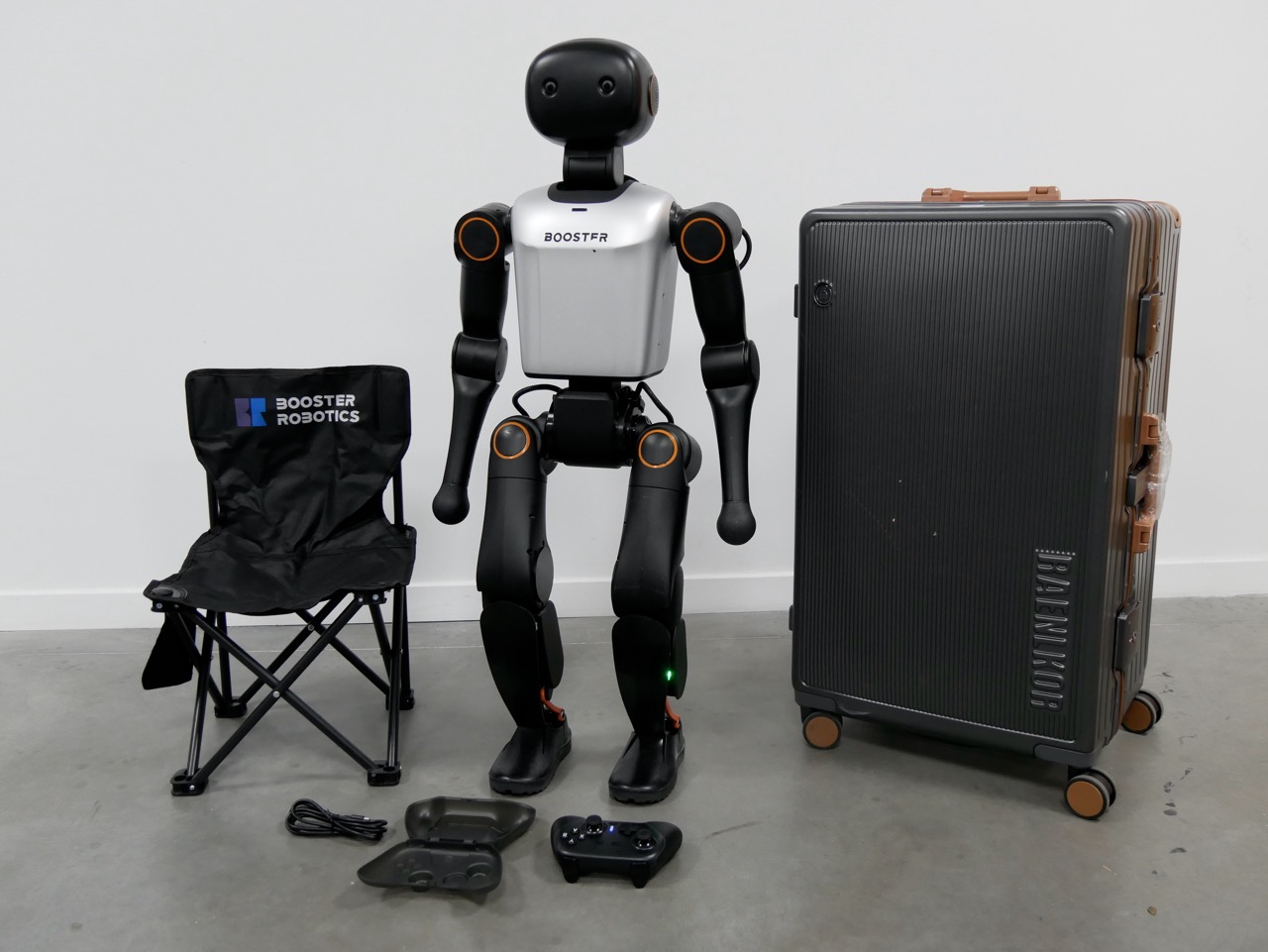
Consider the Booster K1, a kid-sized humanoid from Beijing-based Booster Robotics.
It costs around $5,000, weighs approximately 25 kilograms and doesn't even have proper hands.
At demonstrations, people inevitably ask whether it can empty a dishwasher.
Apparently, humanity's ultimate benchmark for artificial intelligence is still whether it can deal with the dishes.
No, it can't.
But here's what it can do.
The K1 runs ROS 2, part of the open-source Robot Operating System ecosystem. Think of it as something like Android for robots: a shared software foundation that developers can use to program movements and sensors.
After a few firmware updates, someone without a programming background used an AI assistant to help program the robot to recognise a box, wait for it, carry it across a room and put it down.
The whole experiment took two days.
Was it industrial grade? Absolutely not.
Was it a working example of physical AI, assembled for a few thousand euros by someone who couldn't code? Absolutely.
And that's the point.
The hardware will improve. Hands will become more capable. Movements will get faster. Prices will come down.
The more interesting question is whether businesses will have learned what to do with these robots by the time they're ready.
Because hardware can improve while it's sitting in a warehouse.
Organisational experience can't.
Europe wants certainty. China wants to find out.
Remember those robots falling over?
At China's New Year gala in 2025, humanoids were mostly waving and performing simple choreography. A year later, they were doing flips.
At the Robot Games, one machine was designed to sprint. And sprint it did.
Stopping gracefully? That's a feature for version 2.0.
Behind the spectacle sits a simple innovation philosophy.
Pick one task. Build something that can perform it. Put it into the world. Observe what fails. Collect data. Improve. Repeat.
The robot doesn't have to be good at everything. It has to become better at something.
China's brutally competitive market accelerates that process. Companies copy, improve and undercut one another at extraordinary speed.
It's a phenomenon known as neijuan, or involution.
It can produce remarkable innovation, but also destructive price wars, shrinking margins and overcapacity. Beijing has already tried to curb these effects in industries such as EVs and solar panels.
So no, China's approach isn't automatically better.
Europe's focus on precision, safety and reliability has real advantages. When your reputation takes decades to build, releasing a half-finished product can be an expensive mistake.
But here's a question worth asking in your next innovation meeting:
Are we testing this technology to discover what it can do, or are we testing it to prove that it isn't ready yet?
Because waiting for uncertainty to disappear isn't a strategy.
It's a decision to let someone else figure things out first.
The most interesting robot in China does almost nothing
Forget kung fu, ping-pong and choreographed backflips.
One of the most fascinating robotics examples from China involves a machine that spends almost its entire working day standing still.
At a Chinese automotive plant, a robot waits next to an assembly line.
Most of the time, nothing happens.
Occasionally, a component arrives in the wrong position. The robot intervenes, corrects the problem in roughly ten seconds and returns to waiting.
The production line keeps moving. No human needs to spend an entire shift watching for something that might happen only once every few days.
Not particularly spectacular.
Potentially incredibly valuable.
And it illustrates a completely different way of thinking about robotics.
Instead of asking, "How many human tasks can this robot replace?" ask, "What's the smallest useful problem we can get this robot to solve?"
A robot doesn't need to replace an entire employee to create value. It might only need to eliminate one frustrating interruption, thousands of times over.
The most useful applications may turn out to be the least impressive to watch.
The dancing robots are the marketing.
The real transformation happens on the factory floor.
Europe isn't out of the race. Yet.
It's tempting to frame robotics as another technology race in which China sprints ahead while Europe writes a report about the starting line.
But the reality is more interesting.
European companies are already experimenting with humanoids in industrial environments.
BMW is deploying Hexagon's AEON at its Leipzig plant. Mercedes-Benz is testing Apptronik's Apollo. And German industrial supplier Schaeffler has signed an agreement to introduce more than 1,000 robots into its operations by 2032.
Its first phase focuses on box handling.
Not backflips.
Boxes.
Exactly the kind of unglamorous, narrowly defined application that makes industrial robotics interesting.
Schaeffler also supplies actuators, the components that move robotic joints. That makes it both a customer and supplier in the emerging ecosystem.
It's the kind of integrated industrial thinking for which China usually gets the credit.
And Europe's supposedly frustrating regulations might create advantages of their own.
Humanoid, for example, chose wheels over legs partly because wheeled machines can navigate European certification requirements more easily.
Constraints don't just slow innovation. They shape what gets built.
Europe's strength may not lie in creating the cheapest humanoid.
It may lie in building the safest, most reliable and easily integrated robotic solutions for industrial environments.
But that advantage only matters if companies start building experience.
Please, not another innovation pilot
Remember when every company needed a chatbot, preferably before anyone had figured out what it was supposed to do?
Let's not give humanoids the same welcome party.
We've seen what happens when organisations treat emerging technology primarily as an opportunity to launch impressive pilots.
Lots of announcements. Plenty of enthusiasm. Not always much to show for it.
With robotics, there's a better approach.
Start with a sandbox, not a transformation programme.
Take a real operational process. Break it into smaller tasks. Find the simplest, most repetitive or inconvenient one that a robot might already be capable of performing.
Then get affordable hardware into the hands of a curious team.
Give them room to experiment.
Not an enormous business case. Not a twelve-month implementation roadmap. Not a steering committee for every firmware update.
Think hackathon, not transformation programme.
Let people discover what's possible, where things break and what needs to change.
Of course, keep sensible safety boundaries, particularly around people and moving machinery.
But don't confuse avoiding risk with avoiding learning.
For European companies, the opportunity comes down to three things:
Copy the learning loop. Experiment early, learn from small failures and improve continuously.
Connect to affordable technology. The competitive advantage may not lie in owning the robot, but in knowing how to use it.
Build on Europe's strengths. Industrial expertise, data integration, safety and compliance could become powerful differentiators as robots move into real working environments.
One Chinese technology CEO compared today's humanoid robotics industry to electric vehicles seven or eight years ago.
If that comparison holds, the businesses experimenting today could be the ones best positioned when the technology matures.
Not because they bought the most robots.
Because they learned the most.
The most important investment isn't money
In a few years, plenty of executives will ask themselves whether they invested in robotics at the right moment.
Whether they bought too early. Whether they waited too long. Whether they backed the right technology.
But there may be a more important question.
Did we invest enough time in learning?
China is experimenting at extraordinary speed, in public, with all the awkwardness and failures that come with it.
Europe is moving too, bringing its industrial expertise, engineering strengths and commitment to reliability.
There's no reason to assume only one approach can succeed.
But there is a real risk in confusing technological immaturity with a lack of opportunity.
Today's robots don't have to do everything.
They don't have to replace entire jobs.
They don't even have to empty the dishwasher.
They just need to be useful enough to teach us something.
Because when the robots are finally ready, the biggest advantage may belong to the companies that didn't wait for them.