Why festivals are becoming more important in the age of AI


Belgium is gearing up for a new festival summer. Within days, the gates of Rock Werchter, Tomorrowland, Gent Jazz, the Lokerse Feesten and dozens of other festivals will open. Hundreds of thousands of people will sing, dance, cheer and immerse themselves in a collective experience.
That seems obvious. But perhaps today it matters more than ever.
As artificial intelligence reshapes our economy, algorithms compete for our attention and polarisation increases, a need is growing for something technology cannot provide: human connection.
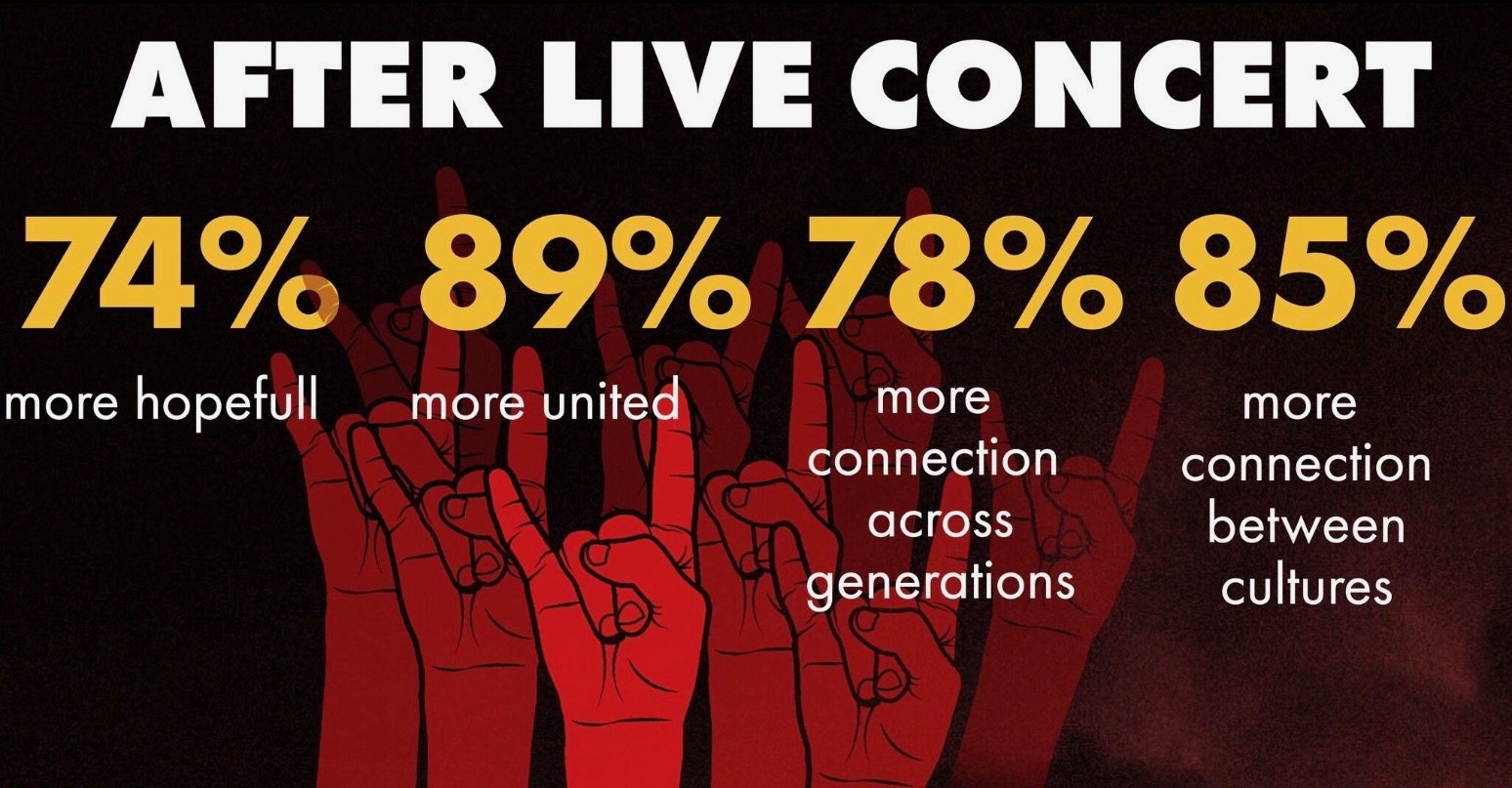
74% more hope, 89% more connected after a concert
Recent research backs this up. According to The Goosebumps Effect (2026), 89 percent of people feel more connected after a live event. 85 percent believe that concerts and festivals build bridges between different cultures. And 74 percent feel more hopeful after a shared live experience.
These are not figures about entertainment. They are figures about music and festivals as social technology.
The paradox of the AI age is that technology makes us more efficient, but not necessarily closer to one another. While companies invest billions in artificial intelligence, connection is becoming scarcer. The same research shows that 66 percent of people feel that connection is declining and 77 percent experience more division.
Recently newspapers are running headlines about the growing mental health crisis. Worldwide, nearly half the population now considers mental health one of the greatest societal challenges. Young people and women in particular report feeling less connected and less hopeful.
Music does what AI cannot: KAMU MUTA & AWE
As our lives become more digital, people are once again seeking out physical spaces where they can experience things together. Music turns out to be an exceptionally powerful mechanism for this. Even in Kyiv, Ukraine, people are coming together around music to connect.
Scientists now draw on concepts from 3,000-year-old Sanskrit to describe it:
Kama Muta — the feeling of love, belonging and connection. When strangers suddenly feel part of the same community. The moment when "I" briefly becomes "we."
And Awe: the feeling of being part of something greater than yourself. Research shows that such experiences increase empathy, stimulate cooperation and temporarily shrink our sense of self.
Festivals are fundamentally about jumping into the moment and surrendering yourself to a collective experience. Anyone who has ever stood among thousands of people at a Bruce Springsteen or Coldplay concert, or at Pukkelpop or Rock Werchter, knows that feeling intuitively. What is new is that researchers are now better able to measure it. During collective live experiences, emotions, behaviour and even physiological responses appear to synchronise. What we experience as goosebumps or collective energy turns out to be a real social phenomenon.
That insight reaches far beyond the festival field.
Because that is precisely where an important lesson lies for businesses.
Why CEOs should care
In recent years, organisations have rightly invested massively in digital transformation. Today they are investing billions in artificial intelligence. Productivity, automation and efficiency increasingly determine the difference between winners and losers. In almost every sector, today's market leader risks being overtaken by organisations that deploy new technology faster and better.
But that is exactly what creates a new challenge. The more organisations invest in technology, the more they must invest in humanity. AI helps us make decisions faster. AI optimises processes. AI makes knowledge more accessible. But AI does not create trust. AI does not create community. AI does not create shared memories.
People do. And music turns out to be one of the most powerful mechanisms for strengthening that human connection.
Perhaps companies should therefore look differently at their relationship with music, culture and festivals. Not as sponsorship, hospitality or a marketing budget. But as an investment in human infrastructure. In a world where employer branding, ESG, sustainability and reputation matter more than ever, supporting a festival is not an expense. It is the most powerful and accessible ways for a brand to remain relevant, human and connected with their people and audience (customers).
AI increases productivity. Music increases connection.
Festivals create something our society is increasingly short of: trust, encounter and belonging. They bring people together across generations, backgrounds and beliefs. They are among the last places where thousands of people literally feel the same thing at the same moment.
That may also explain why some festivals have stayed relevant for fifty years. Woodstock and Live Aid inspired once, but festivals like Rock Werchter (50 years), Pukkelpop (40 years) and the Lokerse Feesten (50 years) manage to do it every year, reinventing themselves generation after generation. They have survived economic crises, technological revolutions and societal shifts without losing their core.
That ability to stay relevant in a world of permanent change deserves respect. In the past, the church tower fulfilled that role.

“This is our church, this is where we heal our hurts*”
Today, festivals and concerts are increasingly the places where communities come together. The local festivals are the new churches. The larger ones that have endured for years are our cathedrals.
* Maxi Jazz from Faithless captured it perfectly decades ago. “This is our church. This is where we heal our hurts.” Socially festivals
Belgium also has a remarkable ecosystem. From Tomorrowland to Stageco, dozens of specialised companies and thousands of volunteers place us among the global leaders in live entertainment. That cultural, social and economic capital deserves more appreciation than it usually receives. Belgium is better off with music, concerts and festivals than without them. It is the social infrastructure of our wellbeing in the age of AI.
And perhaps that is the real lesson of this festival summer. As machines become smarter, human experiences become more valuable. Information is abundant. Connection is scarce.
Concerts, festivals and culture are not a luxury. They are not a summer extra. They are an investment in trust, connection and meaning. Social Technology that unites.
In an age where artificial intelligence is becoming the infrastructure of our economy, festivals may well be the infrastructure of our humanity.
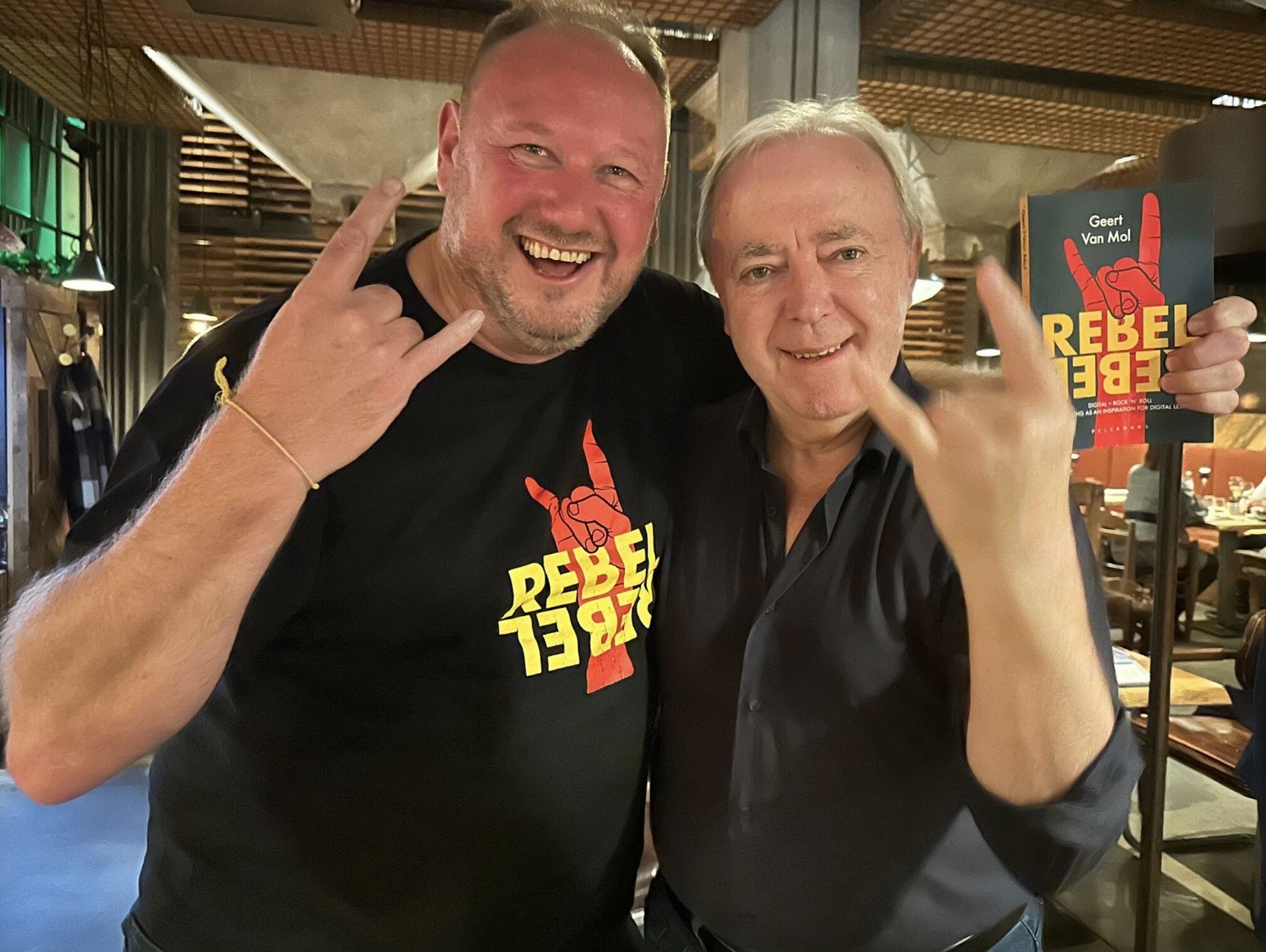
Geert Van Mol is author of REBEL REBEL (Dutch, French, English version), former Chief Digital Officer of Belfius and keynote speaker about music as inspiration for leadership and innovation @nexxworks.