
Radar – by nexxworks: Never Normal Heroes – 🧠 Intelligence Native: Peter Hinssen and Casey Newton on AI, Society, and the Razor's Edge of Optimism
Explore insights from tech journalist Casey Newton on Anthropic, Block, and the intelligence-native era reshaping Silicon Valley.

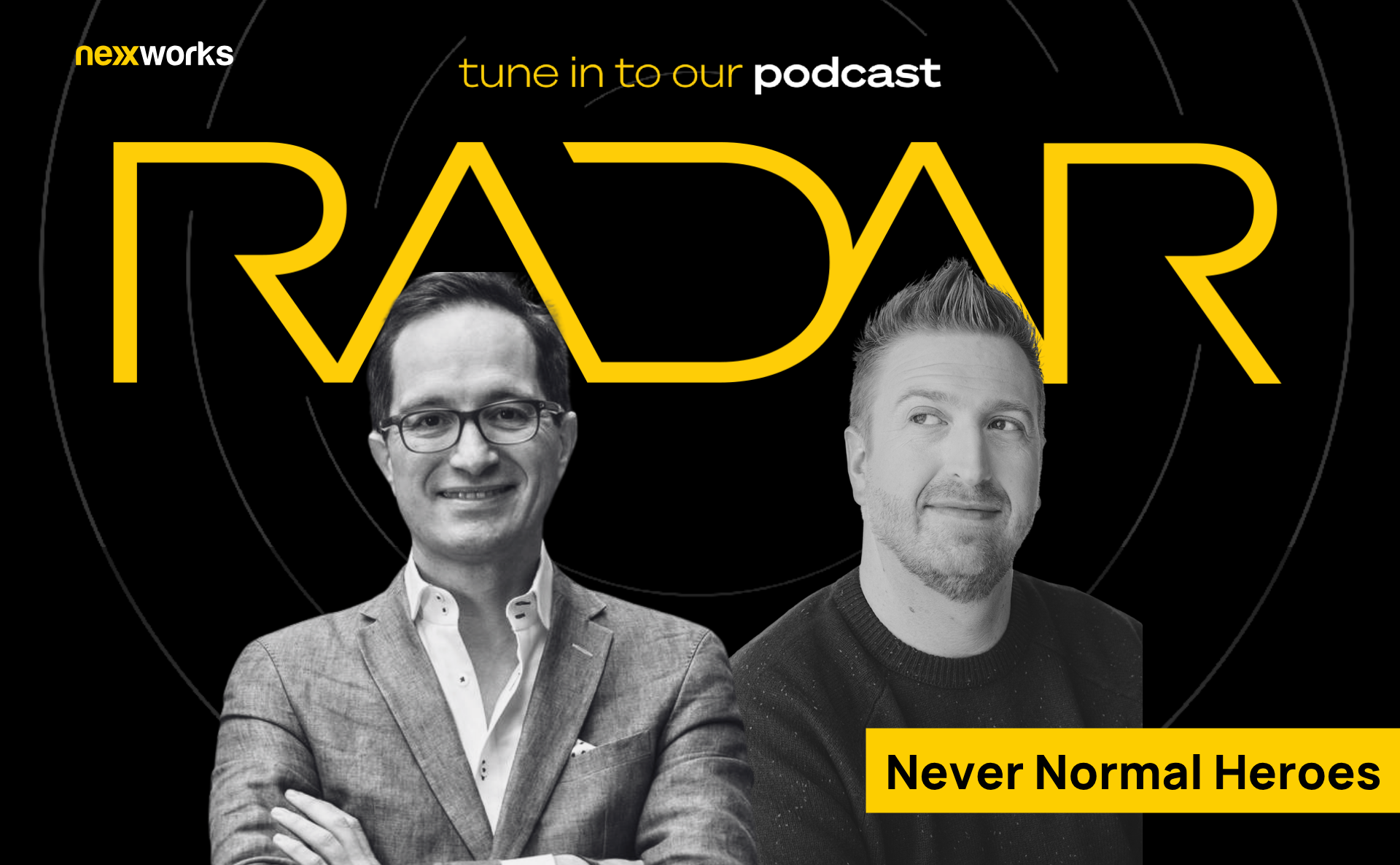
BONUS EPISODE
In this episode, Peter Hinssen sits down with Casey Newton — founder of Platformer, co-host of Hard Fork, and one of tech's sharpest journalistic voices — to make sense of an AI industry moving faster than anyone can lunch through. Casey reflects on the difference between covering social media and covering AI's scientific frontier, the alarming rise of "AI psychosis" cases, and why he gives Anthropic credit for two consequential stands this year: refusing the Pentagon's autonomous weapons and mass domestic surveillance contract, and pulling back the cyber-capable Mythos model to harden defenders before release. The conversation turns to Block's intelligence-native pivot under Jack Dorsey — 4,000 of 10,000 employees cut, stock up — and what it signals for every CEO now reimagining their workforce. Peter and Casey dig into Engels' Pause and whether AI will repeat the Industrial Revolution's decades-long wage stagnation, the NIMBY backlash against data centers, and why governments without a social safety net are wildly unprepared for double-digit AI-driven unemployment. They debate what "the bubble popping" actually means, Hard Fork's blind spot on China and humanoid robotics, and close on the question Casey calls a razor's edge: is he still an optimist? Barely.
Key Takeaways
- The safety guardrails have come off: dozens of documented "AI psychosis" cases — some leading to self-harm — suggest companies have not done enough pre-release testing, despite their early acknowledgment of the risks.
- Anthropic took two consequential stands in 2025–2026: refusing the Pentagon's contract changes that would have enabled mass domestic surveillance and autonomous killing machines, and delaying the cyber-capable Mythos model to set defenders loose on internet vulnerabilities first.
- Block's "intelligence native" pivot is the boardroom conversation of the year: Jack Dorsey laid off 40% of staff to become "a smaller, faster, intelligence native company" — the stock jumped, and every CEO is now asking what it would look like to run their business with a powerful intelligence layer and far fewer people.
- Engels' Pause is the AI economy's elephant in the room: for 40 years after the Industrial Revolution, productivity and GDP soared while average wages stayed flat. Casey and Peter ask whether AI will repeat that pattern — and whether OpenAI's "industrial policy for the intelligence age" reads suspiciously like a union manifesto for a reason.
- NIMBY backlash against data centers is rational self-interest: communities are using the only lever they have left — blocking construction — to slow an AI rollout they believe threatens their jobs. Governments need a real answer, and in America, the social safety net is one of the things "we're worst at."
- The "bubble" debate conflates two arguments: many AI startups will fail (true and inevitable), but the underlying technology is here to stay and will keep improving. The dead-enders predicting total collapse "have all been proven wrong" — and they keep moving the goalposts.
- Hard Fork's blind spot is China — and humanoid robotics may be where it shows: Casey concedes the show indexes on the absolute frontier and undercovers Chinese open-source momentum; Peter argues that combining world models and LLMs with humanoid robots is where China is "mind-blowingly ahead."
🎧 Listen to Radar by nexxworks here:
Or listen on Apple Podcasts or Spotify

.png)
.svg)


This might also interest you
.png)
