Lessons learned from China: 5 paradoxes from 2 weeks in Shenzhen
We just got back from two weeks in China for different tailor-made learning expeditions. After my first week in Shenzhen, I wrote that it had recalibrated my sense of what "fast" means. Again. By the end of the second week, I had to recalibrate once more.


Lessons learned from China: 5 paradoxes from 2 weeks in Shenzhen
We just got back from two weeks in China for different tailor-made learning expeditions.
After my first week in Shenzhen, I wrote that it had recalibrated my sense of what "fast" means. Again. By the end of the second week, I had to recalibrate once more.
Not because China turned out to be slower than I thought, but because I finally saw the other half. They sometimes go super fast, and at the very same time, they take their time.
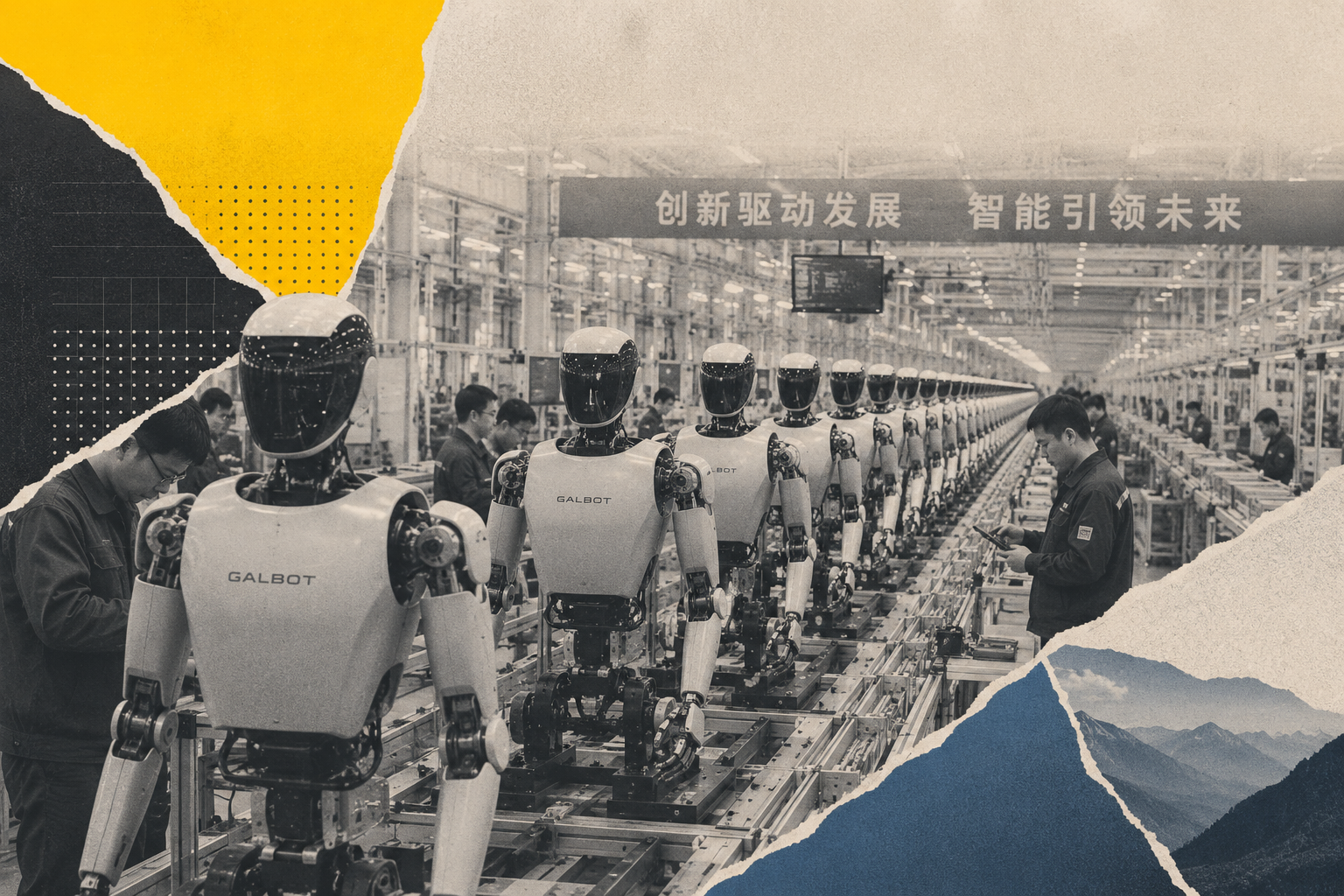
A robot prototype in one or two weeks. A logistics network built at a loss for well over a decade. Same country, same story.
Once I saw that paradox, I started seeing paradoxes everywhere. On the opening evening of our second program, Pascal Coppens, China expert and partner at nexxworks, gave us the frame: in China, the answer to "this or that?" is usually "both". Here are the five I brought home. Some are mine, some are from Pascal.
1. Fast and patient
Speed is the first thing everyone notices in China. Patience is what you only notice when you look a little longer. I saw both, often in the same company.
Fast first. At Robotuo, in Shenzhen's Robot Valley, founder and CEO Tuo Liu put it like this: "Here in Shenzhen, it only takes maybe one week or two weeks to get the prototype done. That's what we call Shenzhen speed."

Then patient. Our host at BYD summed up both sides in one sentence: "It took BYD roughly 15 years to go from zero to its 5 million vehicles. But for the second half, it only took us maybe roughly 15 months to go from 5 million to 10 million." (New energy vehicles, that is.) Fifteen years of patience, then fifteen months of speed. The second part only exists because of the first.
You see the same pattern in places that look a lot less spectacular. JD Logistics spent well over a decade building its network at a loss. It only posted its first full-year reported profit in 2023.
At Hai Robotics, co-founder Shengdong Xu explained that every warehouse project is simulated in detail before anything gets built. According to him, a first project typically takes around nine months. And when the system finally goes live? "It's not the end point. It's the start point of our service."
Pascal's first paradox, pragmatic or visionary, explains a lot of this. In his view, individuals think in survival mode (today has to work), while the government plans in ten-year cycles.
What I saw on the factory floors is the same paradox, applied to time: lightning-fast in execution, patient over the long term. Pascal describes it as investing in resources first: "This is a very different way of thinking, and the profit will come later."
In Europe, we often do it the other way round. We take our time to decide, and then we want the return by next quarter. (I'm generalizing, I know. But I've sat in enough meetings to recognize it:"What’s the ROI?")
So maybe the question isn't whether to be fast or patient. Maybe it's where: fast in deciding and building, patient in letting a good bet grow.
2. Quantity and quality
This one is Pascal's, and it's one of my favorites.
In Europe, we tend to treat quantity and quality as a trade-off, and we start with quality. Pascal's answer to "quantity or quality?" was quantity first, because that's exactly how the quality gets there. Get to market fast, survive, experiment, validate later, and reach quality at the end. In his view, quality improves with every iteration and reaches a global level after about ten rounds.
It challenges one of the most stubborn mental shortcuts we have about China: cheap means worse. Or, in Pascal's words: "What they've been optimizing over the past 40 years is to lower the cost without lowering the quality."
At xTool, which makes laser engravers and printers for small businesses and creators, founder and CEO Jasen Wang told us: "Speed is the core principle in this company." xTool now launches four to six new products a year. And speed works in both directions. When a project isn't competitive, it stops, even if it's nearly finished. "If we realize that we are wrong, we will stop."
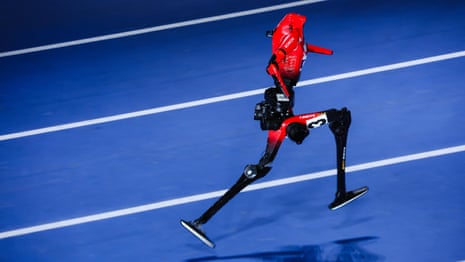
The most public version of quantity first? At the 2nd World Humanoid Robot Games in Beijing this August, a humanoid ran the 100 meters in 8.64 seconds. (Almost a full second faster than Usain Bolt'sworld record of 9.58 seconds.) A year earlier, the winning time was 21.50 seconds. Along the way, plenty of robots stumbled, crashed or
had to be carried off, in front of the cameras. Pascal doesn't read that as failure. He calls it fearless iteration.
Quantity and quality aren't opposites here. The quantity is how the quality gets built.
3. Big brands and invisible networks
We know the names. BYD on our roads. DJI in our skies. Huawei in a lot of pockets. In Shenzhen they're everywhere too, of course.
But the brands are only the part you see. The part that does most of the work is the part you don't.
According to David Li, Executive Director of the Shenzhen Open Innovation Lab (SZOIL), who has studied the city's ecosystem for fifteen years, the famous brands are only the tip of the iceberg. In his view, they make up about a quarter of the system. The other three quarters is a cooperative network of suppliers, designers and engineers who work together, even across competitive lines.
"The smallest unit of innovation is no longer the company. It is the network."
David also calls Shenzhen "a gigantic innovation casino". You arrive with an idea, find partners, put a small batch on the market, and if it doesn't work, you try the next idea. Trying costs so little that people keep coming back to the table.
You can feel that network on the ground. Huaqiangbei, the city's legendary electronics district (No, I did not buy way too much geeky stuff. Not at all.), sells components from thousands of factories, which is why a customized sample can be ready there in as little as two days. In Robot Valley, universities, component makers and factories sit side by side, and Tuo Liu described his role as connecting all of them: "We probably cannot handle all of that, but we definitely can find the right person to do it."
The same goes for relationships. In China, everything runs through people who know people. It's no coincidence that Pascal and David have known each other since 2010, or that doors open for a group that arrives through that kind of network.
So the brands tell you where China is going, and the network tells you how it gets there so fast. For a European leader, "who is the Chinese champion in my industry?" is a good first question. But the better one might be: what network is that champion standing on, and where could we plug in?
4. Too early and just in time
Let me be honest. We're definitely not there yet with humanoids. For most companies, it's too early to roll them out at scale.
And at the same time, it's just in time to start. Because the part that takes longest isn't the robot. It's everything you need to learn before the robot is useful.
Yes, I saw them walk, wave, sort, carry and pose for photos (fangirl mode: fully activated). But on the factory floor, full-size humanoids are still at the pilot stage.
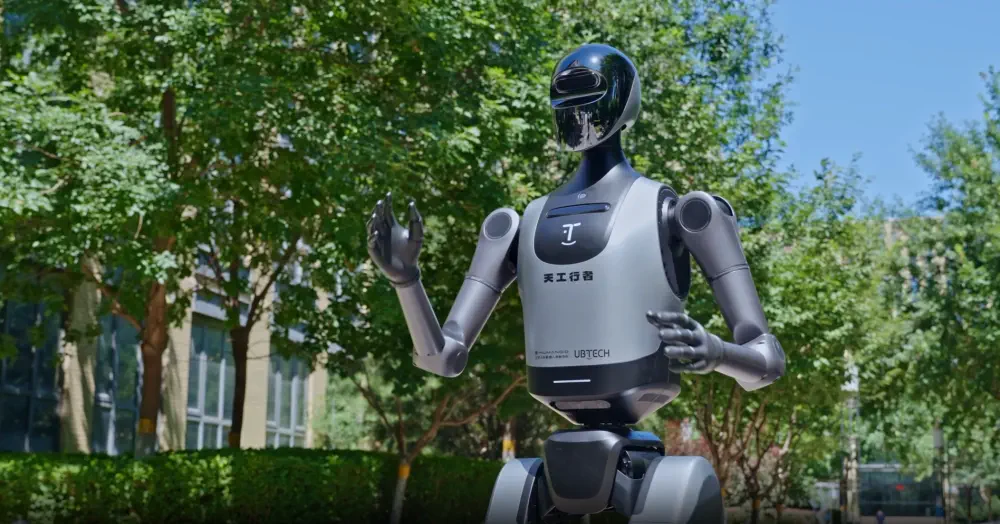
At UBTECH, which we visited on both programs, the message was remarkably consistent. The hardware is getting good enough for many tasks. What's missing is the data and the know-how, and a company has to build those itself, one scenario at a time. According to UBTECH, training a humanoid for one new use case takes about a year. Or, as one of our hosts there put it: "without training, it's just a toy." Their advice was refreshingly practical: start small, with one or two robots, a few technical people and a test room, on proven tasks like picking and sorting. They also see humanoids as a flexible layer next to classic automation, not as a replacement for people.
Dobot is already delivering humanoids, but they are still a small part of its business. On site, the team called the next three to five years decisive. What I found interesting was that they built a station to collect robot training data two years ago, before their humanoid even existed. Too early for the product, just in time for the learning.
And at XPENG, which builds several EV models on one flexible line (on site, they told us switching between them takes about two minutes), body welding is fully automated, while people stay central in assembly and quality control. Pascal calls these "light factories" rather than dark ones, because people are still very much part of the picture.
His broader point: China looks at robotics pragmatically. "It's about a thousand robots that can do one thing." It's about the boring, repetitive or unhealthy tasks, not entire jobs.
So both are true. The robot you buy in three years will be better than today's. But the data, the skills and the confidence your team builds in the meantime won't come in the box. That's why testing now is crucial, for when the moment comes.
(For the record: I'm still firmly Team Centaur. Give me the robots, but keep the human in the saddle. See my LinkedIn for more info, or listen to our Radar podcast.)
5. Showroom and shop floor
China still triggers strong reactions. I notice it every time I come back and tell people where I've been.
Most of those reactions pick one of two stories. Either China is the shiny, robot-filled future, or that future is mostly a showroom. After two weeks, I can tell you: both stories are true. Often in the same building.
At JD Logistics, every parcel is traceable ("Every time they scan, the system will know when and who put the stamp on it"), and yet a lot of the work is still done by hand.
Pascal called it the two Chinas, and it kept showing up on both programs: the showroom, and the everyday reality right next to it. His summary: "They just keep going, fixing the airplane while it's flying."
The same goes for the shortcuts Pascal named on our first morning: cheap means low quality, everything is planned in Beijing, and the Chinese are followers. Each one picks one side of a paradox. Cheap and good? See paradox 2. Planned and bottom-up? "If we look at China as only a centralized entity, we're going to miss half of what's going on here because the real drive is coming from the bottom." Followers and creators? "So they copy, they imitate, but they improve, they iterate, they share, and ultimately they build the next big thing."
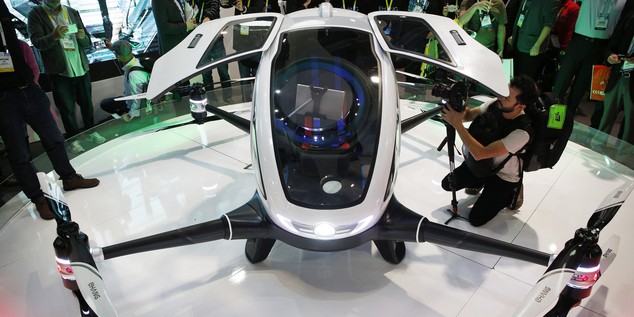
Take EHang, a company we visited that builds pilotless passenger drones. The aircraft are technically ready, but regulation sets the pace. So in the meantime, EHang runs drone light shows and builds firefighting and logistics drones. A showroom future and a very practical present, side by side. Pascal's comment on the bus: "I call that creative. We don't always call that creative." I agree, and it’s a pity we don’t.
Having a bias isn't the problem. We all bring one. It only becomes a problem when it makes us see only one half of the picture. The goal isn’t to blindly admire China, or to dismiss it, but to understand it. That takes a lot more "yes, and" than "yes, but".
What I'd tell a CEO who wasn't on the bus
Since I got home, people keep asking me the same thing: so what should we do with all of this?
My honest answer starts with: go and see for yourself. I still meet a lot of people who underestimate what China can do, and what it will do. Not because they aren't paying attention, but because most of it happens below the surface: in networks, on factory floors, and in years of patient building that only become visible once the speed kicks in.
What you see there depends a lot on how open you are to seeing it. Come to confirm what you already think, and you'll find that too. Come looking for what's next, and you'll need a bigger notebook.
And back home? Don't wait until the technology is ready. Sure, we're not there yet with humanoids. But start testing now, so you're ready when the moment comes.