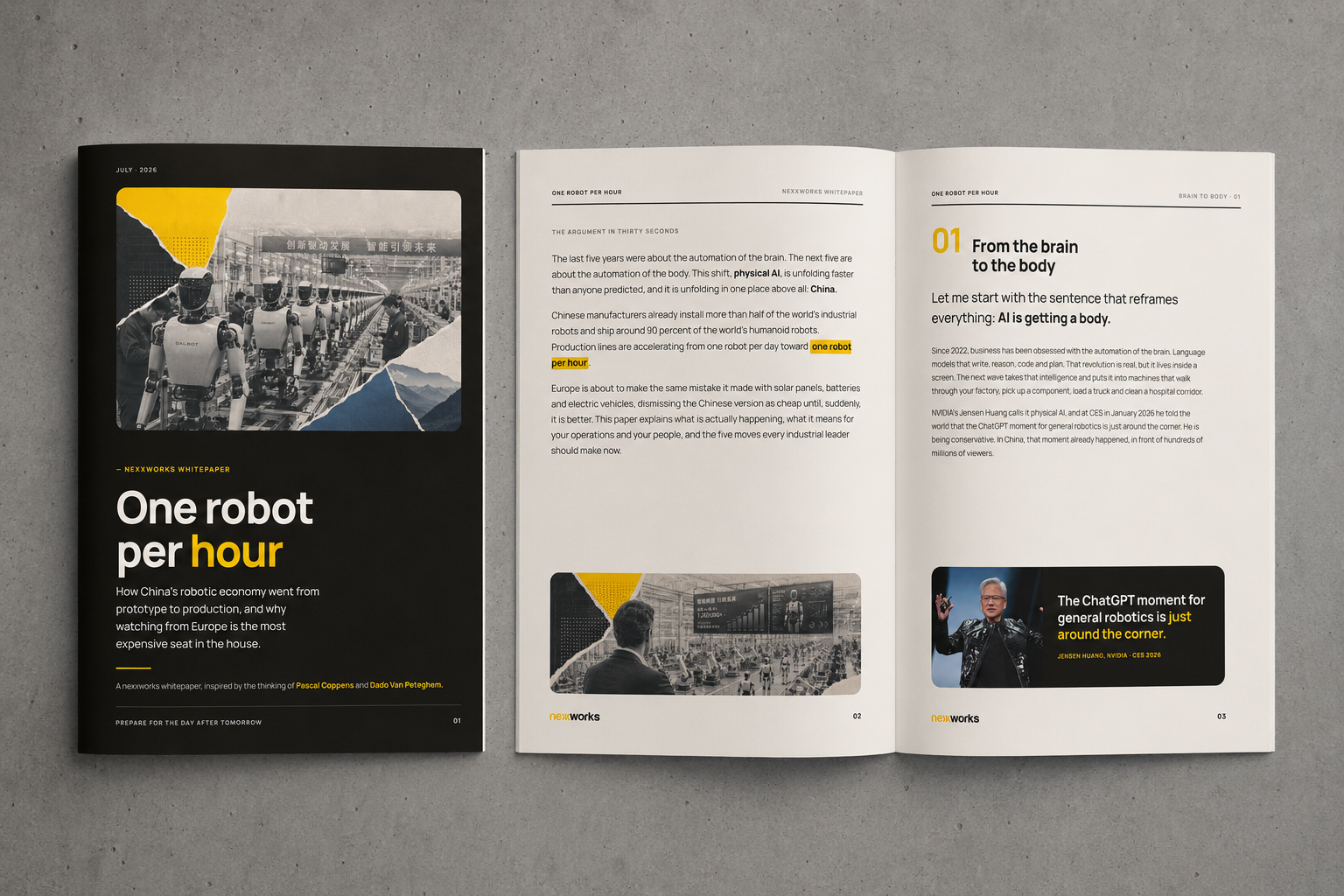
China's One Robot Per Hour
How China's robotic economy went from prototype to production, and why watching from Europe is the most expensive seat in the house.

Download the full report HERE
When did you last see a robot do a full day's work?
Be honest. You have seen the demo videos. The backflips, the dancing humanoids, the staged warehouse clips. Almost nobody has watched a robot clock in, swap its own battery and keep going through the night shift.
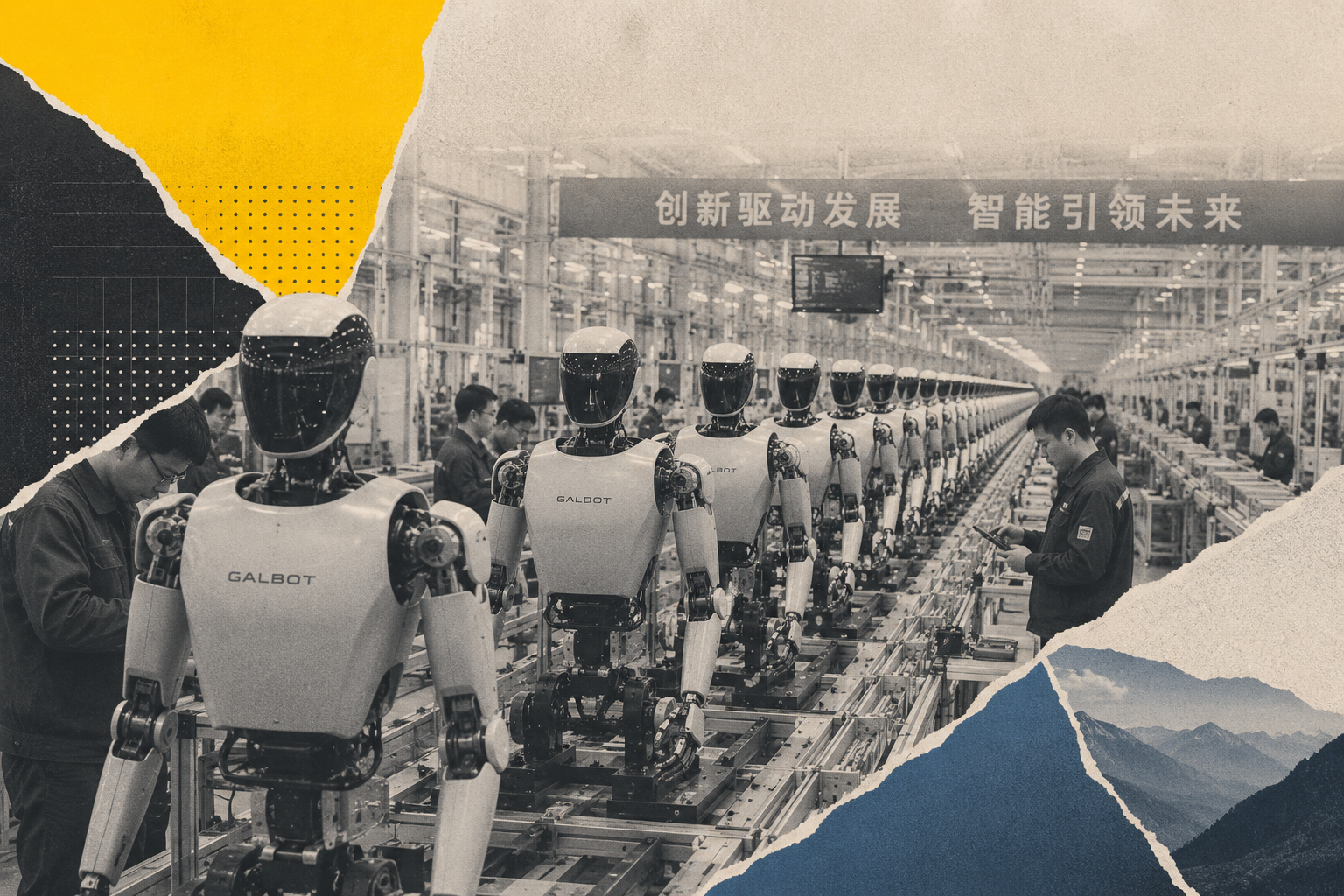
In China, that is no longer a demo. It is a Tuesday. Chinese manufacturers already install more than half of the world's industrial robots and ship around 90 percent of its humanoids. Production lines are ramping from one robot per day toward one robot per hour. The last five years were about the automation of the brain. The next five are about the automation of the body, and it is unfolding in one place above all.
Meanwhile, Europe is about to make the same mistake it made with solar panels, batteries and electric vehicles: dismissing the Chinese version as cheap, right up until it is better. Xiaomi runs a smartphone factory with the lights off. UBTECH's humanoids are working shifts at BYD and Foxconn. And Unitree sells an entry-level humanoid for under 6,000 dollars. A moonshot is becoming a line item.
What's inside:
- Why physical AI is the next wave, and why its capital is not in Silicon Valley
- The three forces that make China the center of gravity of the robotic economy, none of them temporary
- What is already operational on the ground, from dark factories to robotaxis and pilotless air taxis
- Why Europe's real gap is not invention but deployment
- Five concrete moves for industrial leaders, before the crossover hits your business case


.svg)