Back From Silicon Valley: 6 Lessons We’re Bringing Home
Human connection, faster execution, and the new AI reality.

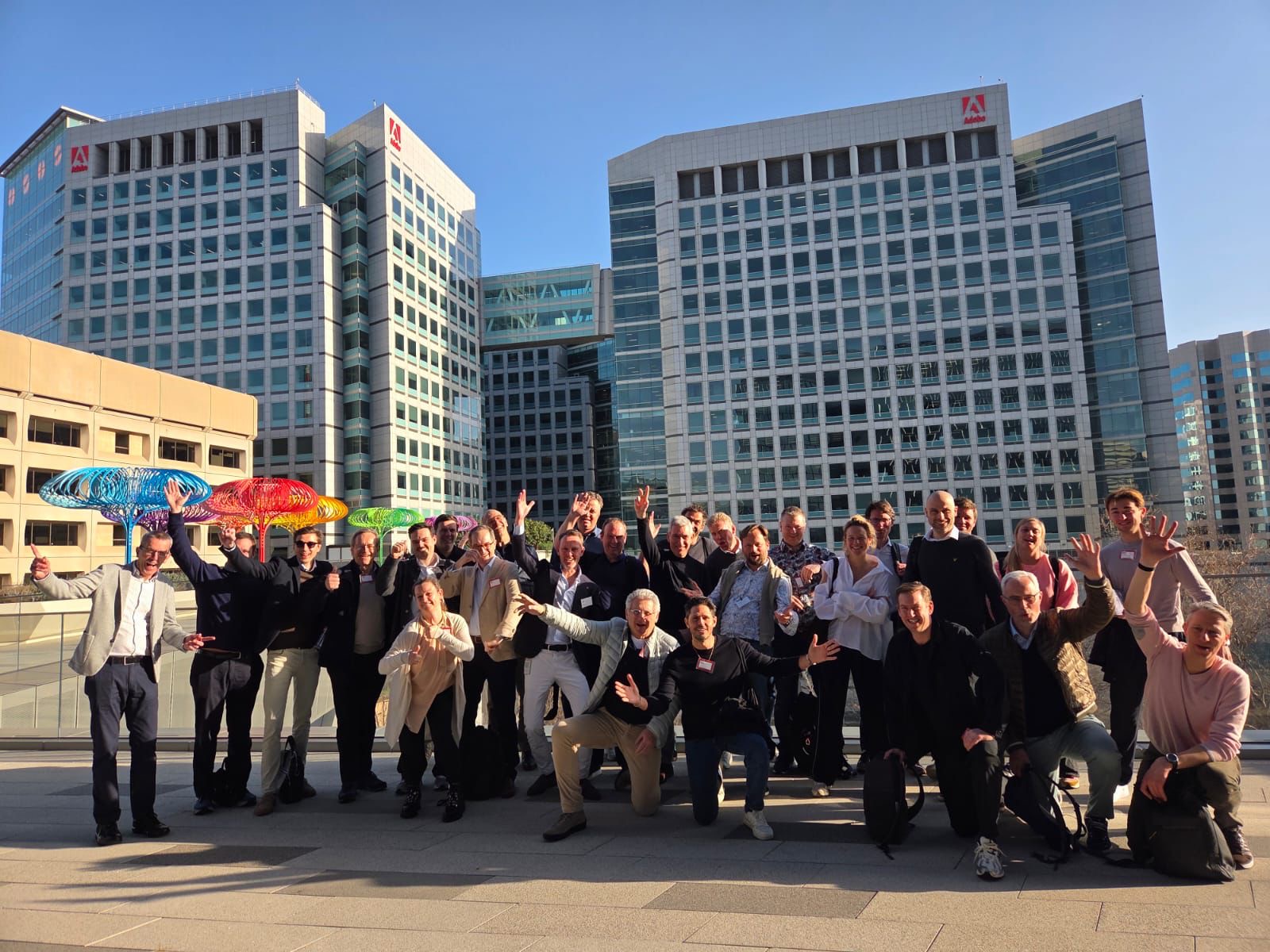
Five days. Twelve company visits. One insight that changed everything.
We just wrapped up another Spirit of the Valley tour in San Francisco with our nexxworks crew. Jet-lagged? Maybe. Energized? Absolutely. Still processing? Definitely.
Every year, we take a group of leaders to the epicenter of innovation.
Not for the tourist version of Silicon Valley, the one with shiny logos and rehearsed pitches, but for the unfiltered version. Candid conversations. Behind-the-scenes access. The kind of moments that rewire how you think about your own business.
This year's edition? It hit different.
We visited Salesforce, Stanford, Box, Stripe, Adobe, SandboxAQ, DevRev, Cloudflare, and a handful of startups most Europeans haven't heard of yet. We heard from Jeremiah Owyang, Timothy Papandreou (formerly of Alphabet's Moonshot Factory), Eva Nahari, Karel D'Oosterlinck from OpenAI, and many more. We lunched at Buck's Diner, where Apple and PayPal were born over burgers and fries. We rode in Waymo's self-driving cars (no driver, just vibes).
But here's the thing.
The biggest takeaway wasn't a product. It wasn't a platform. It wasn't even AI.
It was a mindset shift. And we brought six of them home:
1. Authenticity wins
In a week drowning in agents, platforms, and automation, the most future-proof insight was surprisingly analogue: human connection.
Not the LinkedIn kind. The real kind.
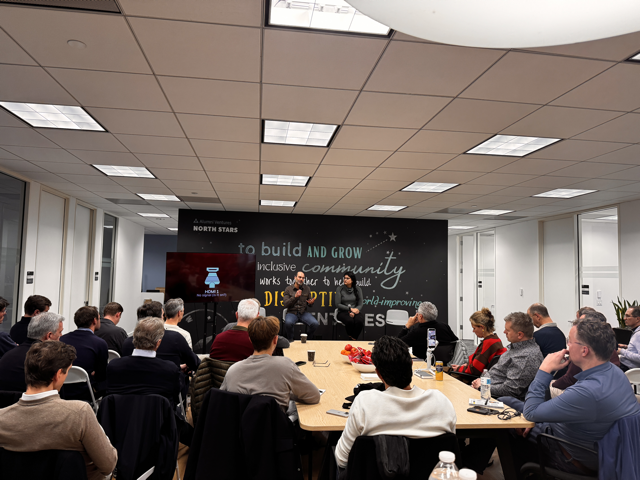
We watched it happen in real time. Participants from completely different industries, insurance and retail, pharma and banking, finding common ground over shared challenges. Late-night conversations at the hotel bar that turned into strategic partnerships. Questions asked during company visits that sparked ideas nobody saw coming.
At Stripe, the mantra was crystal clear: users first. Every week, real customers sit in the room. The whole company listens. Not a survey. Not a dashboard. Actual humans, face to face.
And as Steven Van Belleghem framed it during his keynote: we're moving from search engines to decision engines. Service is becoming a commodity. Loyalty is becoming emotional. And belonging beats points. Every single time.
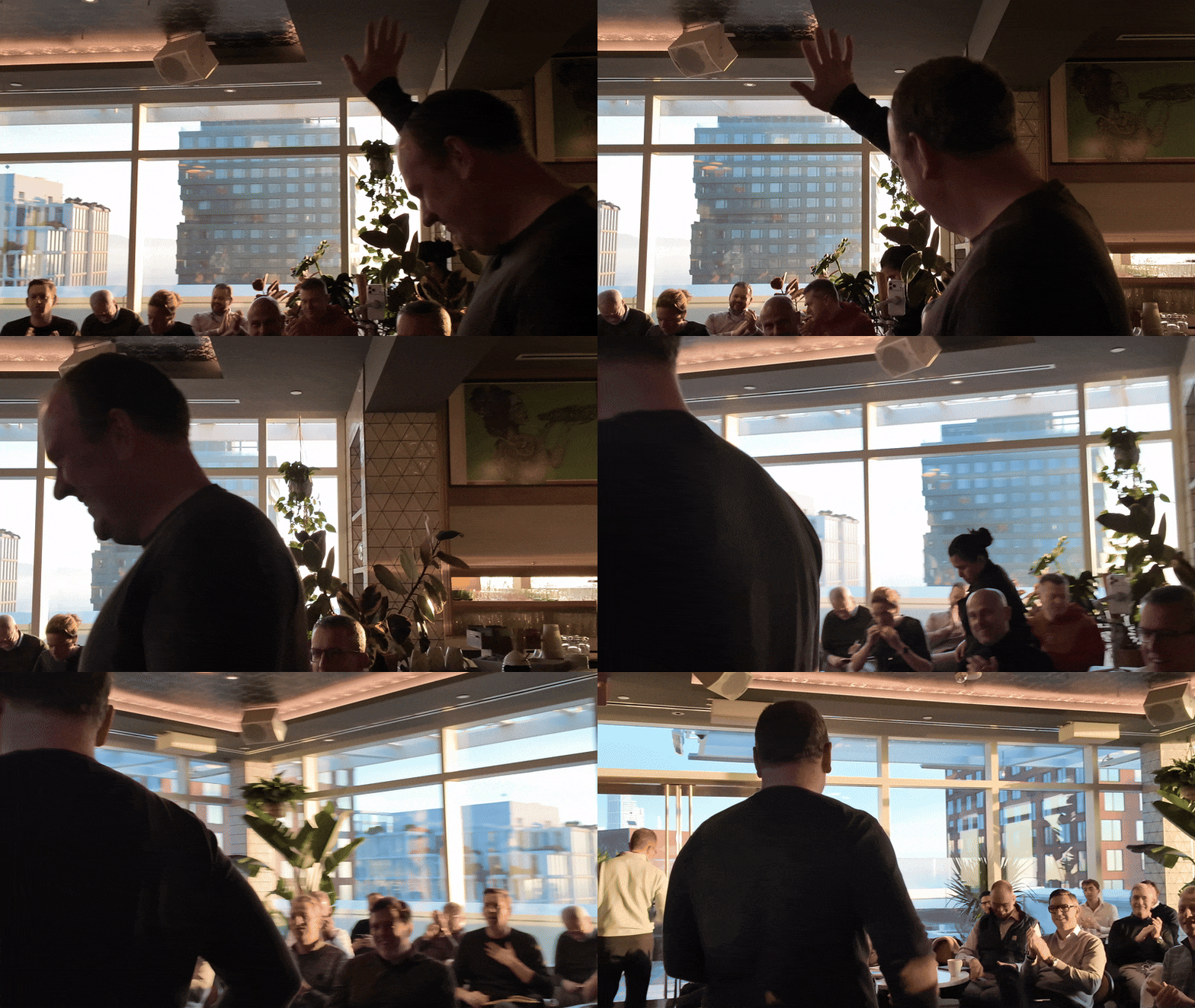
You can't replicate that energy in a slide deck. You have to be in the room.
2. Mindset is everything
The Valley doesn't just build products. It builds velocity.
10x thinking. Moonshots. And the humility to start with the hardest problem first.
At Box, CEO Aaron Levie told our group something that stuck with everyone: "We're betting the whole company on AI." Not a department. Not a task force. The whole company. When the leader of a $3.8 billion company says that with zero hesitation, you listen. That kind of clarity is rare. And it's contagious.

At SandboxAQ, Timothy Papandreou walked us through what real moonshot thinking looks like, not the poster-on-the-wall kind, but the operational kind. Born from Alphabet's X, their approach is about deliberately rejecting incrementalism. Not +10% improvements, but 10x outcomes. Not comfort, but tackling the hardest constraint first. Because that constraint is where the real breakthrough lives.
Even the Waymo cars felt like a metaphor. Assertive, precise, and oddly calm about navigating chaos. Sound familiar?
And then there was Peter Hinssen, who dropped the line that kept echoing all week: "It's not a storm. It's the climate." This isn't a phase. This is the new operating environment. And the sooner you accept that, the sooner you start building for it.
3. Demos, not memos
The new Valley mantra. And it might be the most important one.
We first heard it at Stripe, and it kept popping up everywhere we went. Less slides, more prototypes. Less discussion, more delivery. Less planning, more doing.
The real work starts when you stop talking about it.
This is the cultural shift that separates the companies moving at Valley speed from the ones still scheduling meetings about meetings. OpenAI doesn't wait for perfect. Salesforce doesn't wait for consensus. They ship, they learn, they iterate. And they do it at a pace that makes European quarterly planning look like a geological timescale.
At Adobe, we saw this in action too. A company founded over 40 years ago, now reinventing itself through AI-powered tools like Adobe Firefly, embedding intelligence across its entire platform. Legacy doesn't have to mean slow. It can mean: we've been adapting longer than you've been alive.
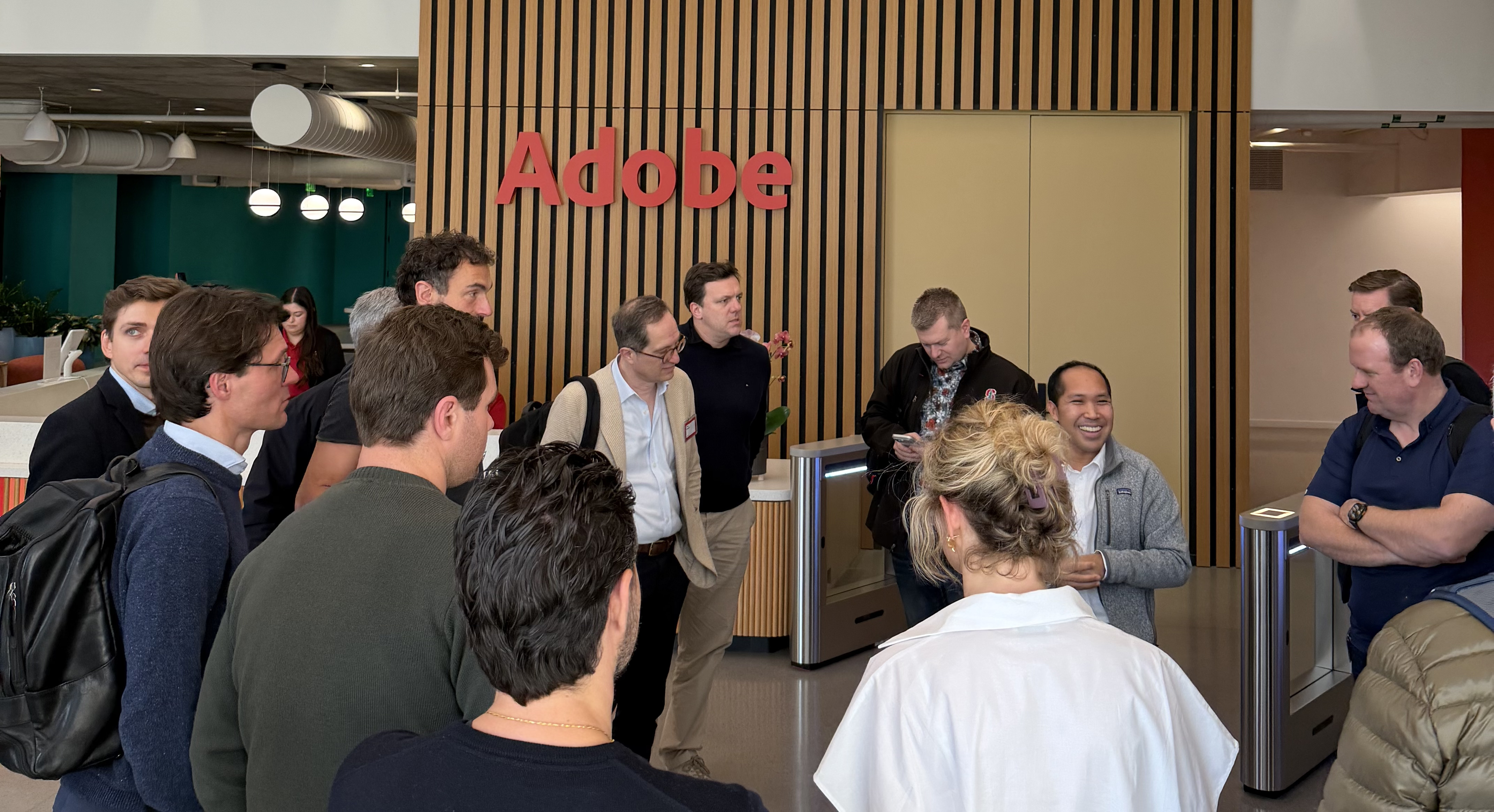
One participant summed it up perfectly after returning home: "The mode is clear. Demo, not memo. Less slides. More prototypes. Less discussion. More delivery."
That's the energy.
4. Speed is the new normal
Want to know what "long-term thinking" means in Silicon Valley right now?
Two months.
That's it.
That's the planning horizon.
And for some companies, even that feels generous.
Agentic AI isn't coming. It's already reshaping how companies operate.
At Crew.ai, we saw teams of specialized AI agents handling actual workflows: summarizing reports, onboarding customers, predicting trends. Not as a pilot. As the default operating model. At OpenAI, Karel D'Oosterlinck (a Belgian, by the way, representing the next generation of AI researchers) showed us what the cutting edge actually looks like from the inside.
Jeremiah Owyang, a Valley veteran who has been tracking this space for over two decades, put it bluntly: AI agents will grow from a $5 billion to a $500 billion industry. Not in a decade. In the coming years.
%20(1).gif)
And yes, we rode in Waymo's self-driving cars. No steering wheel. No safety driver. Just you, the car, and the quiet realization that this isn't a prototype anymore. They already drive better than most humans. They're expanding to London later this year.
5. Moonshots require discipline, not just optimism
This one caught a lot of people off guard.
We tend to associate moonshot thinking with optimism, with blue-sky brainstorming and "what if" sessions. But the companies actually landing moonshots? They're obsessively disciplined.
Timothy Papandreou's session at SandboxAQ made this painfully clear. 10x thinking forces fundamentally different questions. The hardest constraint defines the real breakthrough. Learning beats the fear of failure. And reality is the ultimate validator.
Moonshots don't fail because of a lack of ambition. They fail when thinking remains linear while the challenge is exponential.
The future won't be built by those who optimize the past. It will be built by those who dare to redesign the system itself. Start harder. Think bigger. Stay grounded.
6. The real takeaway: the future is built together
Here's what nobody tells you about Silicon Valley tours.
The tech is impressive. The offices are stunning. The ambition is absolutely contagious. But the most durable advantage we witnessed? It wasn't a product or a platform.
It was how people think, share, and move together.
The energy between our participants, watching them challenge each other, build on each other's ideas, and form connections that will outlast any trend cycle, that was the magic nobody expected. As one of our participants, Nico Wolff, beautifully put it: there's a German word that captures it perfectly. Schaffensfreude. The joy of creating, building, and making things real.
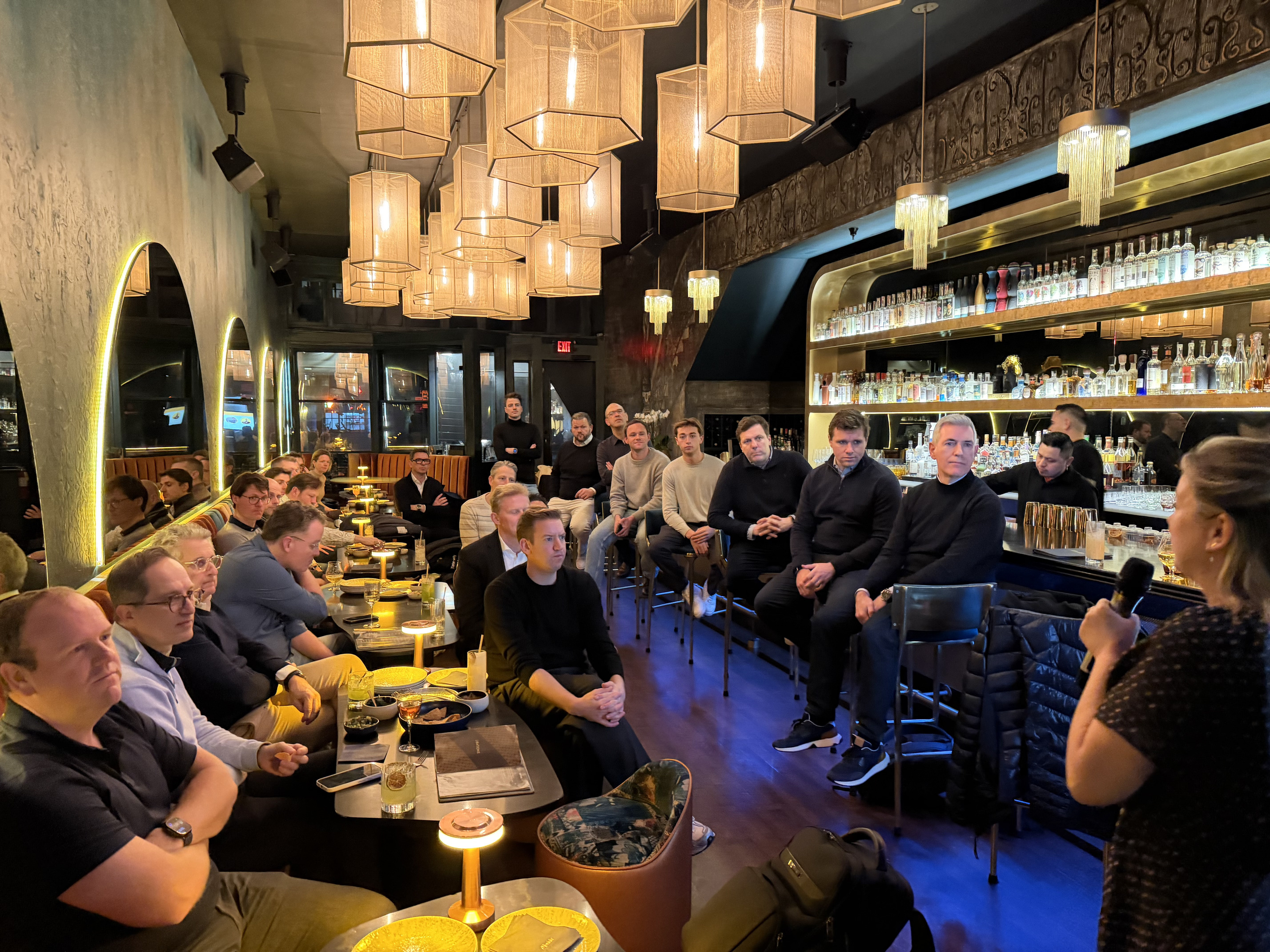
From the opening dinner at Movida (a Michelin-recommended restaurant where Mexican and Persian cuisines collide in the best possible way) to the closing dinner at Waterbar overlooking the Bay, this wasn't just a program. It was a catalyst.
One participant from TelSmart said it was "a top week that will change a lot in my life and my company." Another wrote: "What stood out most was not the technology alone, but the mindset behind it. Open conversations. Radical clarity. Speed paired with responsibility."
That's the Spirit of the Valley. Not just what they build out there. But how it changes what you build when you come home.
So, what's next?
Great news: we're heading back to San Francisco in January 2027.
That's about all we can say for now.
But if this edition is anything to go by, you'll want to be in the room.
Because the insights are powerful.
The connections are real. And the energy? You have to feel it to believe it.
Stay tuned. We'll share more soon.